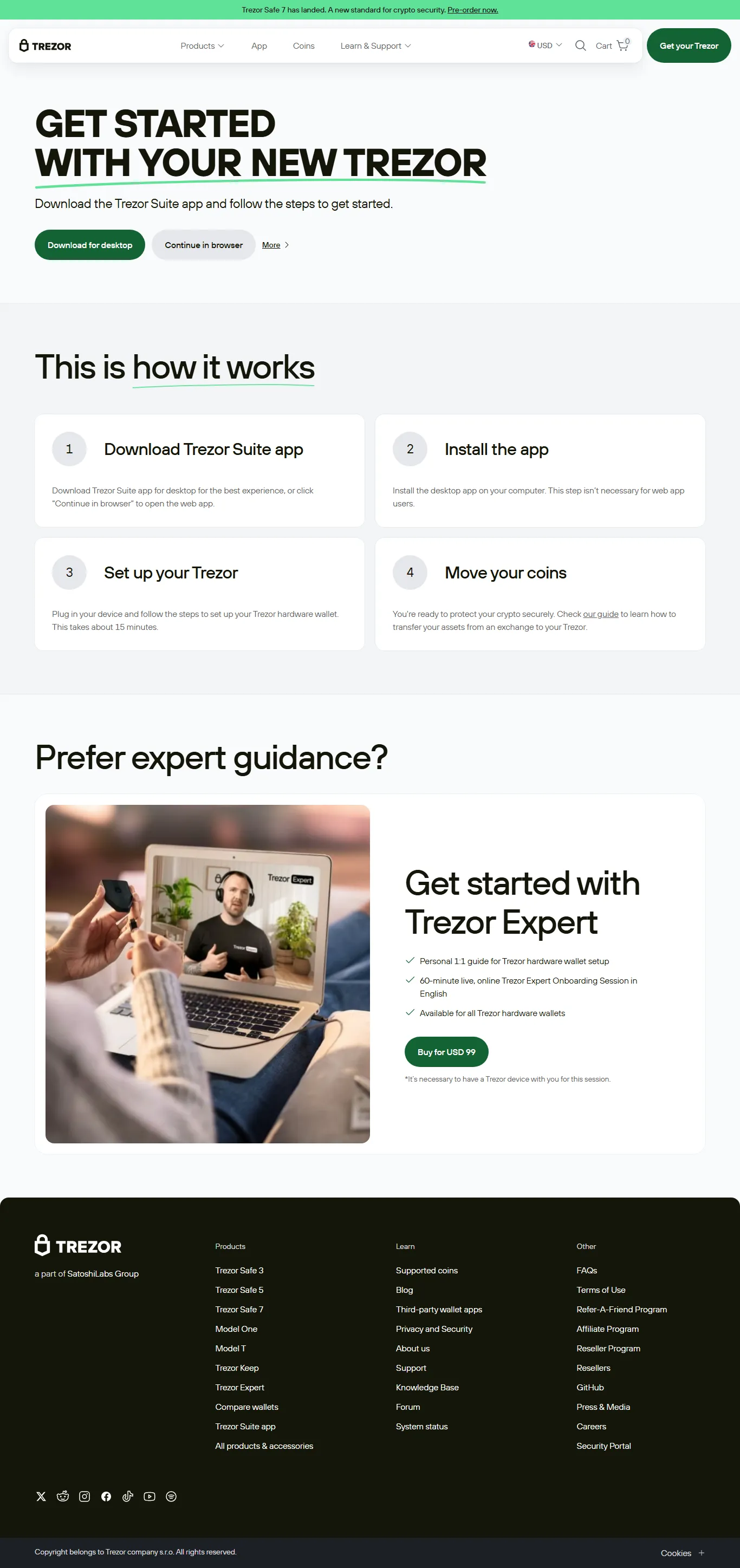
Trezor.io/start – Complete Guide to Setting Up a Secure Hardware Wallet
Cryptocurrency ownership comes with freedom, but it also comes with responsibility. If you are holding Bitcoin or any other digital asset, protecting your private keys is more important than chasing the next market trend. This is where Trezor.io/start plays a critical role.
Trezor.io/start is the official setup page for Trezor hardware wallets. It helps users safely configure their devices, install verified firmware, and create a secure wallet without exposing private keys to the internet. Whether you are new to crypto or moving funds away from exchanges, this guide will walk you through everything you need to know.
What Is Trezor.io/start?
Trezor.io/start is the official onboarding page created by Trezor for initializing a hardware wallet. Instead of downloading random software or following unofficial tutorials, users are guided through a secure and verified setup process.
Through this page, you can:
Verify that your Trezor device is genuine
Install or update firmware safely
Create a new wallet or recover an existing one
Generate and back up your recovery seed
Enable PIN protection
This ensures that your crypto wallet is created in a secure, offline environment from the very beginning.
Why Trezor.io/start Is Important for Crypto Security
Many people lose cryptocurrency not because blockchain technology is weak, but because of poor security practices. Exchanges get hacked, phishing sites steal recovery phrases, and malware drains hot wallets.
Using Trezor.io/start helps prevent these issues by enforcing best security practices:
Private keys are generated offline
Recovery seeds are never uploaded or stored digitally
Transactions require physical confirmation
Malware cannot access wallet secrets
This is known as cold storage, and it is one of the safest ways to store crypto long term.
How a Trezor Hardware Wallet Works
A Trezor hardware wallet is a physical device that stores your private keys offline. Unlike software wallets, it never exposes sensitive information to your computer or the internet.
Here is how it works in simple terms:
Your private keys are created inside the device
When you send crypto, the transaction is signed inside the device
Only the signed transaction is sent to the blockchain
Your keys never leave the hardware wallet
Even if your computer is infected with malware, your funds remain protected.
What You Need Before Visiting Trezor.io/start
Before you begin the setup process, make sure you have the following:
A genuine Trezor hardware wallet
A computer or laptop
A stable internet connection
A pen and paper for writing the recovery seed
A quiet and secure environment
Rushing through setup is one of the most common mistakes new users make.
Step-by-Step Setup Process at Trezor.io/start
Step 1: Choose Your Trezor Model
When you visit Trezor.io/start, you will be asked to select your device model. This ensures that you receive the correct firmware and instructions for your specific wallet.
Step 2: Connect Your Trezor Device
Plug your Trezor into your computer using the provided USB cable. If the device is new, it may not have firmware installed yet. This is normal.
Step 3: Install the Official Wallet Interface
You will be guided to install the official Trezor wallet interface. This software allows you to manage accounts, send and receive crypto, and monitor balances securely.
Step 4: Install or Update Firmware
Firmware is the operating system of your Trezor wallet. Installing the latest firmware ensures:
Protection against known vulnerabilities
Device authenticity verification
Compatibility with supported cryptocurrencies
Always install firmware only through the official setup process.
Step 5: Create or Recover a Wallet
At this stage, you can either:
Create a new wallet if this is your first Trezor
Recover an existing wallet using a recovery seed
If you are new, creating a new wallet is the recommended option.
Understanding the Recovery Seed
The recovery seed is the most important part of your wallet setup. It is a list of words, usually 12, 18, or 24, that represents your private keys in a human-readable form.
If your device is lost, damaged, or stolen, this seed allows you to recover your funds on a new device.
Best Practices for Recovery Seed Security
Write the words on paper
Never store them digitally
Never take photos of them
Never share them with anyone
Store them in a secure location
Anyone who has your recovery seed has full control over your crypto.
Setting Up PIN Protection
After backing up your recovery seed, you will be asked to set a PIN. This PIN protects your device from unauthorized physical access.
If the wrong PIN is entered multiple times, the device automatically wipes itself. You can then restore your wallet using the recovery seed.
Common Mistakes to Avoid During Setup
Many crypto losses happen during setup. Avoid these common mistakes:
Entering recovery seed words on a website
Downloading fake wallet software
Ignoring firmware warnings
Storing recovery phrases digitally
Sharing wallet information with anyone
Always start from Trezor.io/start to minimize these risks.
Phishing and Fake Website Awareness
Scammers often create fake websites that look identical to official crypto pages. They may appear in ads or phishing emails.
Remember:
Trezor will never ask for your recovery seed
Support teams do not need private keys
Always double-check the URL before proceeding
Bookmark the official setup page and use it every time.
Supported Cryptocurrencies on Trezor
After completing setup through Trezor.io/start, your wallet can support multiple cryptocurrencies, including:
Bitcoin
Ethereum
Litecoin
Cardano
ERC-20 tokens
Many other supported assets
This makes Trezor suitable for diversified portfolios.
Testing Your Wallet Backup
A smart practice is to test your recovery seed before transferring large amounts of crypto. This confirms that:
The seed was written correctly
You understand the recovery process
Your funds can be restored if needed
This step builds confidence and prevents costly mistakes.
Advanced Security Features Available After Setup
Once comfortable, you can explore advanced options such as:
Passphrase protection
Hidden wallets
Multiple accounts
Enhanced privacy controls
These features are optional but useful for users holding larger balances.
Hardware Wallet vs Software Wallet
Software wallets are convenient but remain connected to the internet. This makes them more vulnerable to malware and phishing attacks.
Hardware wallets offer:
Offline private key storage
Physical transaction confirmation
Strong protection against online threats
Using Trezor.io/start places you in control of your assets.
Important Crypto Terms to Know
Private Key
The cryptographic proof that controls funds
Recovery Seed
A backup representation of private keys
Blockchain
A decentralized public ledger
Cold Storage
Keeping private keys offline
Self-Custody
Full ownership and control of crypto assets
Who Should Use Trezor.io/start?
This setup process is ideal for:
Beginners entering crypto
Long-term investors
Users moving funds off exchanges
NFT collectors
Anyone prioritizing security
If you plan to stay in crypto long term, proper wallet setup is essential.
Final Thoughts on Trezor.io/start
Setting up a hardware wallet using Trezor.io/start is one of the most important steps a crypto user can take. It shifts control from third parties back into your own hands and significantly reduces the risk of loss.
In a market filled with volatility, scams, and uncertainty, securing your assets properly is not optional. It is foundational.